
What Is Intelligent Document Processing in Healthcare?

Healthcare runs on documents. Insurance cards, referrals, prior authorizations, explanation of benefits forms, medical records, intake paperwork—every clinical or financial interaction generates paperwork that has to be read, interpreted, and acted on. For decades, that work has been handled manually, often by teams tasked with extracting data from PDFs, faxes, scans, and emails and re-entering it into downstream systems.
Intelligent document processing software exists to change that.
Intelligent document processing software uses artificial intelligence to automatically extract, classify, and structure information from unstructured documents. In healthcare, it enables organizations to process high volumes of paperwork faster, more accurately, and with far less human intervention than traditional data entry or basic optical character recognition tools.
What intelligent document processing software actually does
At a technical level, intelligent document processing software—often referred to as IDP—combines several AI capabilities, including computer vision, natural language processing, and machine learning, to understand documents the way a human would, but at machine scale.
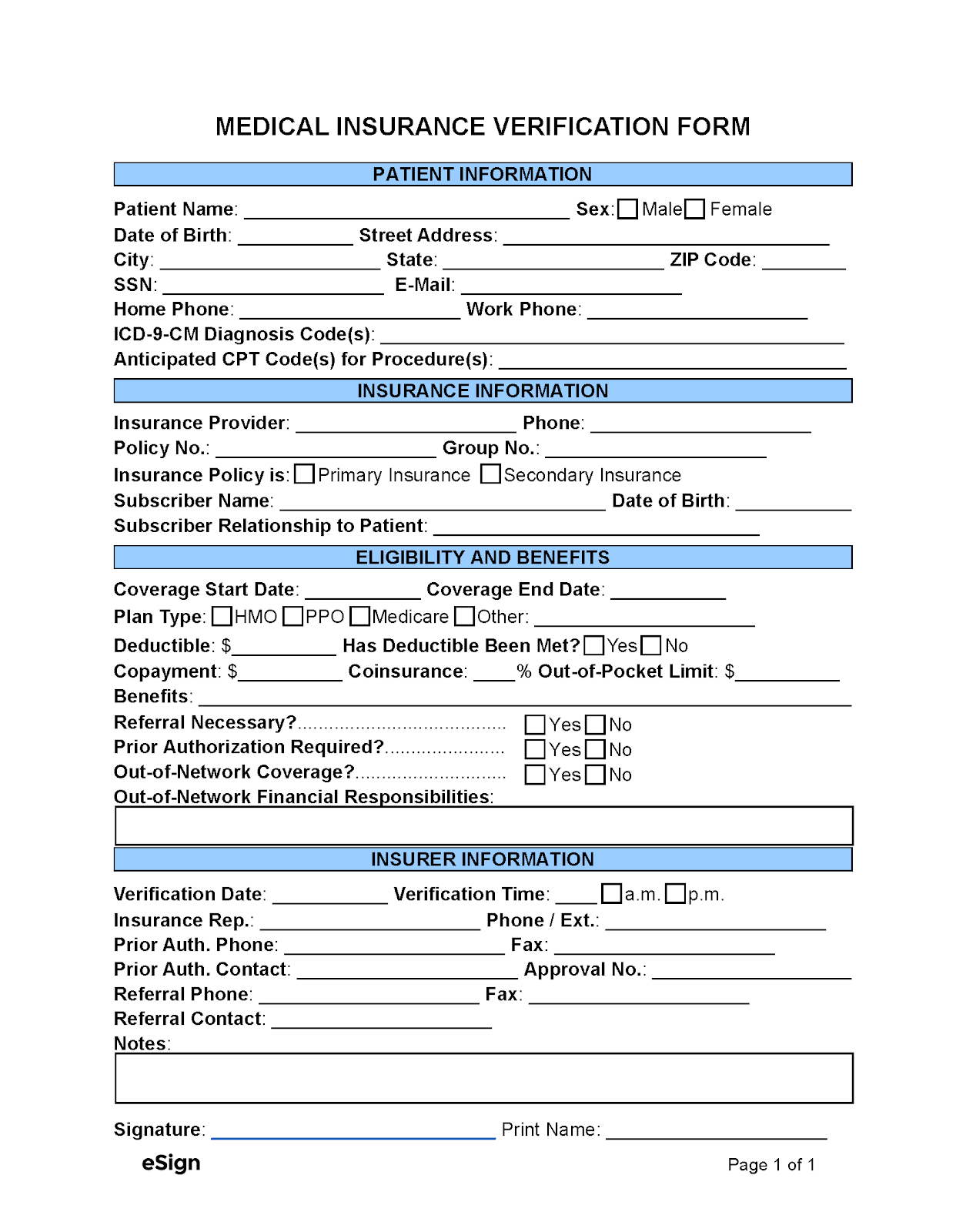
Rather than simply converting images into text, intelligent document processing software can recognize document types, locate relevant fields, interpret context, and validate extracted data against rules or external systems. An insurance card, a prior authorization form, and an EOB may all arrive as PDFs, but IDP systems can identify which is which and pull the correct information from each without rigid templates.
This distinction matters in healthcare, where document formats vary widely across payors, providers, and states—and where small errors can create downstream delays in eligibility checks, claims processing, and payment timelines.
Why healthcare needs intelligent document processing software
Healthcare organizations manage more unstructured data than almost any other industry. Despite widespread adoption of EHRs, critical information still arrives via fax, scanned documents, and emailed attachments. Revenue cycle teams, in particular, spend an outsized amount of time handling paperwork that doesn’t integrate cleanly into digital systems.
Manual document processing introduces delays, errors, and staffing bottlenecks. Even basic automation tools struggle when document layouts change or when information appears in unexpected places. Intelligent document processing software is designed specifically to handle this variability.
As explored in our post on agentic AI and the shift to real-time claims management, healthcare operations increasingly depend on systems that can adapt dynamically rather than follow rigid rules. IDP plays a foundational role in enabling that adaptability.
Common healthcare use cases for intelligent document processing software
While intelligent document processing software can be applied across both clinical and administrative domains, its most immediate impact is often felt in operational workflows.
In revenue cycle management, IDP is commonly used to extract patient demographics, insurance information, authorization numbers, and claim data from incoming documents. Instead of manually reviewing every fax or attachment, teams can route structured data directly into billing, eligibility, or claims systems—reducing cycle times and error rates.
In clinical operations, intelligent document processing software supports intake and referral workflows by digitizing referral forms, lab reports, and outside medical records. By converting unstructured documents into structured data, providers gain faster access to information without relying on manual chart abstraction.
IDP is also widely used in compliance and auditing contexts, where large volumes of documentation must be categorized, reviewed, and retained according to regulatory requirements.
Intelligent document processing software vs. traditional OCR
Intelligent document processing software is often confused with optical character recognition, but the difference is substantial.
OCR converts images into machine-readable text. It does not understand meaning, context, or structure. If a form layout changes or information appears in an unexpected location, OCR systems often fail or require extensive reconfiguration.
Intelligent document processing software builds on OCR by adding contextual understanding. It can recognize that a number represents a policy ID rather than a phone number, identify a document as a prior authorization request rather than a claim, and validate extracted data automatically.
In healthcare environments where accuracy is critical and document formats vary across payors, this intelligence is the difference between automation that scales and automation that constantly requires human cleanup.
How intelligent document processing fits into broader healthcare automation
On its own, intelligent document processing software solves the problem of turning unstructured documents into structured data. Its real power emerges when it is embedded within larger automation workflows.
For example, IDP can extract insurance details from faxed documents and feed that data directly into eligibility verification workflows like those described in How AI Transforms Key Call Center Functions. It can pull authorization numbers from scanned forms and trigger downstream follow-up actions without manual intervention.
In this way, intelligent document processing acts as a bridge between analog inputs and digital systems—connecting paperwork-heavy workflows with more advanced automation, including AI-driven insurance phone calls and follow-up processes.
As healthcare organizations adopt more sophisticated automation strategies, IDP increasingly functions as infrastructure rather than a standalone tool.
Limitations and implementation considerations
Despite its capabilities, intelligent document processing software is not a set-it-and-forget-it solution. Models require training, validation, and ongoing monitoring. Exceptions still occur, and human review remains necessary for edge cases.
Accuracy is also influenced by document quality. Poor scans, handwritten notes, or incomplete forms can still present challenges, although modern systems are far more resilient than earlier generations of automation.
For healthcare organizations evaluating intelligent document processing software, the key question is not whether it eliminates human involvement entirely, but whether it meaningfully reduces manual effort while improving speed and accuracy across high-volume workflows.
Why intelligent document processing software matters now
The volume of healthcare documentation is not declining. Regulatory complexity, payor variation, and administrative requirements continue to expand the paperwork burden placed on providers and billing teams.
At the same time, staffing shortages and cost pressures are forcing organizations to rethink how work gets done. Intelligent document processing software represents a pragmatic response to these realities—addressing a concrete bottleneck rather than promising abstract transformation.
By automating how information is ingested and understood, healthcare organizations create the conditions for more advanced automation across revenue cycle, insurance operations, and patient access workflows.
In that sense, intelligent document processing software is not just about efficiency. It is about rebuilding healthcare operations around how information actually enters the system.

Harry is passionate about the power of language to make complex systems like health insurance simpler and fairer. He received his BA in English from Williams College and his MFA in Creative Writing from The University of Alabama. In his spare time, he is writing a book of short stories called You Must Relax.
Run a pilot on a real workflow.
Bring a representative batch, define the output schema, and validate ROI with your payer mix in 30 to 90 days.
