
When RCM Centralizes, Payer Chaos Follows

Centralization almost always looks like the right move. At least on paper.
For health systems managing multiple hospitals, outpatient sites, and service lines, centralizing revenue cycle operations promises consistency, efficiency, and control. Shared services reduce duplication. Standard workflows replace local improvisation. Leadership gains visibility into performance across the enterprise.
And yet, for the teams inside centralized RCM, the lived experience often feels very different.
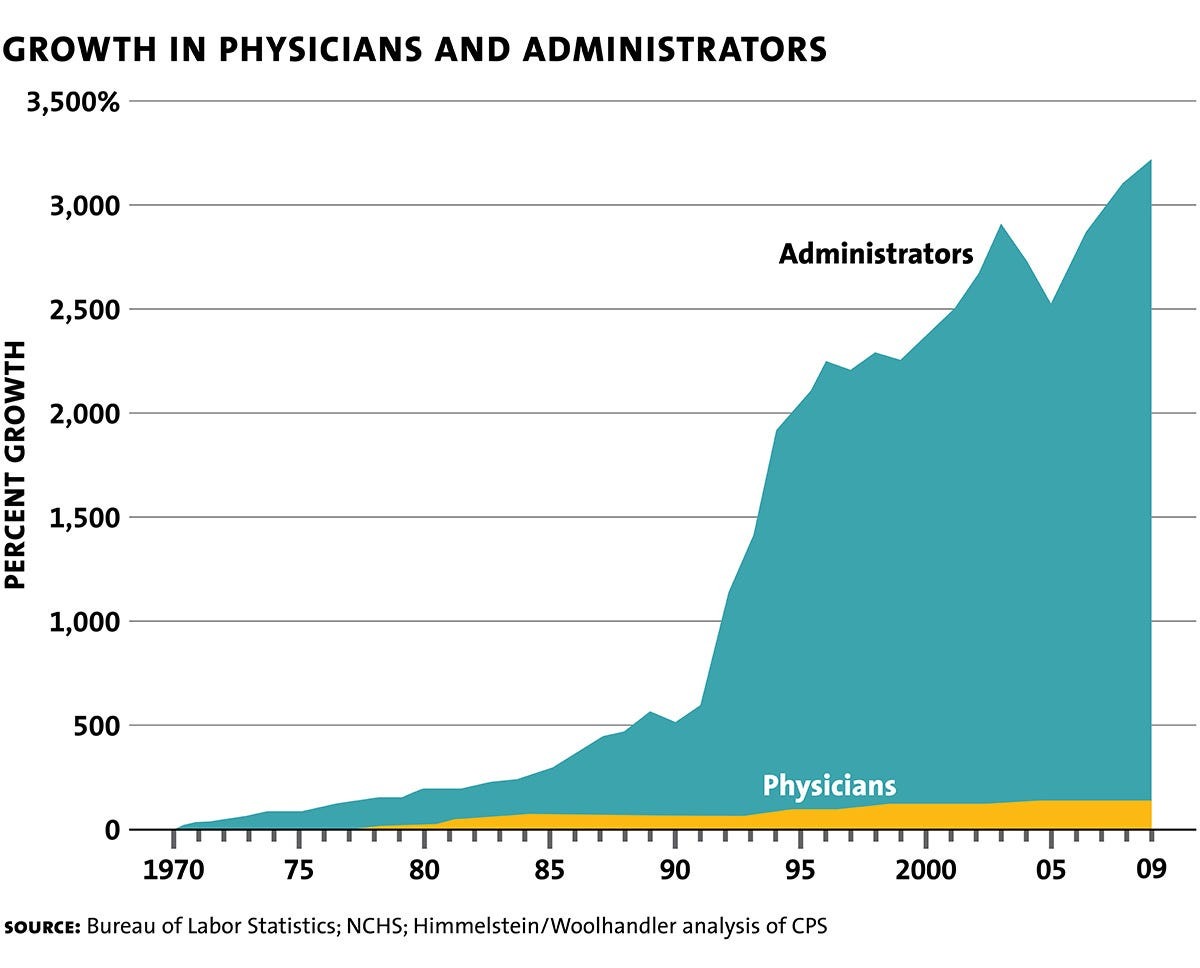
Instead of simplifying the work, centralization concentrates it. Payer complexity, local variation, and unresolved upstream issues don’t disappear when functions are centralized. They accumulate. What was once distributed friction becomes sustained pressure, absorbed by a relatively small number of system-level teams.
This is not a failure of the model. It is a consequence of scale. So, what can RCM teams do to mitigate the operational drag of scaling and centralization?
(Note: this is part three of a series on RCM in large health systems. For part one, read: Why Health System RCM Breaks at Scale. For part two: Health ystems Have a Time-to-Value Problem.)
Why health systems centralize payer work in the first place
Health systems don’t centralize revenue cycle functions casually. The decision is usually driven by real operational needs.
As organizations grow, decentralized models become expensive and inconsistent. Different facilities develop their own interpretations of payer rules, their own workflows, their own escalation paths. Reporting becomes fragmented. Governance weakens. Leaders lose confidence that performance issues are being addressed uniformly.
Centralization offers a correction. By moving eligibility, billing, follow-ups, and payer communications into shared services, systems aim to standardize execution and reduce variability. From a governance perspective, it creates a single point of accountability. From a financial perspective, it promises economies of scale.
In most cases, centralization is not optional. It is the only viable way to manage system-level complexity.
How exceptions multiply across facilities
What centralization does not eliminate is payer variability.
Each hospital brings its own payer mix, contract nuances, historical practices, and local habits. Even within the same health system, two facilities may experience the same payer very differently. That means different denial patterns, different documentation expectations, different responsiveness.
When work is centralized, these differences don’t average out. They surface as exceptions.
Eligibility rules that apply in one market fail in another. Authorization workflows that work for one service line break for another. Claims that sail through from one facility stall inexplicably from another. The centralized team becomes the clearinghouse for every outlier the system generates.
Over time, exception handling ceases to be the edge case. It becomes the job.
A day in the life of a centralized RCM team
Consider a hypothetical, but familiar, centralized payer operations team.
They support twelve hospitals and dozens of outpatient facilities across three states. Their dashboards show volume, aging, and productivity, but those metrics barely capture the reality of the work.
The day starts with a backlog review. Several facilities are escalating delayed authorizations. A payer portal update has changed how eligibility data is displayed. A regional payer is denying claims that were previously clean. None of these issues originated with the centralized team, but all of them land there.
Phones start ringing early. Hold times stretch. Staff toggle between systems, notes, and spreadsheets, trying to reconcile conflicting information. Each call resolves one issue while three more queue up behind it.
By mid-afternoon, leadership is asking why performance dipped in one region. The answer is complicated. It always is.
The mismatch between accountability and control
Centralized RCM teams are held accountable for outcomes they don’t fully control.
They are responsible for clean claims, timely follow-ups, and cash flow performance. But many of the inputs that determine those outcomes sit upstream: front-end data capture, local scheduling practices, provider documentation habits, payer-specific requirements that change without notice.
When upstream variability isn’t addressed, or can’t be addressed quickly, the centralized team absorbs the consequences. They become the buffer between system expectations and payer reality.
This mismatch is one of the most under-discussed sources of strain in health system revenue operations. Accountability concentrates faster than authority.
Why payer phone work becomes institutionalized
In theory, mature systems should rely less on phone calls. Portals, electronic transactions, and integrations promise transparency and automation.
In practice, payer phone work persists.
Payers interpret rules differently. Portals lag behind reality. Authorization statuses are unclear. Claims stall without explanation. When clarity matters, teams call, not because they prefer it, but because it is often the only way to resolve ambiguity.
Centralization doesn’t reduce the need for these calls. It formalizes them. Dedicated teams are created. Scripts are refined. Call volumes become more predictable but no less heavy.
Over time, phone work becomes institutionalized: a permanent fixture of centralized RCM operations rather than a temporary bridge to something better.
The human cost of concentrated complexity
Centralized teams are often staffed lean by design. Efficiency is one of the primary justifications for the model.
But when exception volume grows and payer friction intensifies, that leanness becomes a liability. Staff spend their days context-switching, firefighting, and managing escalations. Burnout isn’t dramatic. It’s cumulative.
Turnover in these roles is especially destabilizing. Knowledge about payer quirks, contract nuances, and workarounds is hard-won and slow to replace. Each departure increases pressure on the remaining team, accelerating the cycle.
From the outside, it can look like a staffing issue. From the inside, it feels like being asked to absorb the full weight of system complexity with limited ability to change its sources.
How successful systems protect centralized teams
Health systems that sustain centralized RCM over time don’t eliminate payer chaos. They manage its impact.
They prioritize work ruthlessly, recognizing that not every exception can be treated as urgent. They create buffers, both operational and cultural, between centralized teams and constant escalation. They acknowledge that shielding staff from noise is as important as optimizing workflows.
Most importantly, they look for ways to reduce the most time-consuming, low-leverage work that drains capacity without improving outcomes. Not through wholesale transformation, but through targeted relief.
Some systems are beginning to adopt tools designed specifically to support centralized teams in this way. Solutions like SuperDial are positioned less as replacements for existing workflows and more as pressure valves to relieve repetitive payer interactions without forcing teams to redesign how they work.
The point is not the tool itself. It’s the mindset: protecting centralized teams as critical infrastructure, not infinite sinks for complexity.
Centralization isn’t the problem. Concentration is.
Centralizing revenue cycle operations is often the right structural decision for health systems. It brings consistency, visibility, and governance that decentralized models cannot sustain at scale.
But centralization also concentrates payer variability, exceptions, and accountability into a small number of teams. Without deliberate effort to manage that concentration, operational pressure becomes chronic.
For leaders overseeing shared services and system-level RCM, the challenge is not whether to centralize. It is how to acknowledge and mitigate the operational cost of absorbing payer chaos.
Recognizing that reality is the first step toward building revenue operations that are not just efficient on paper, but sustainable in practice.

Harry is passionate about the power of language to make complex systems like health insurance simpler and fairer. He received his BA in English from Williams College and his MFA in Creative Writing from The University of Alabama. In his spare time, he is writing a book of short stories called You Must Relax.
Run a pilot on a real workflow.
Bring a representative batch, define the output schema, and validate ROI with your payer mix in 30 to 90 days.
