
Prior Authorization Gold Carding: How State Exemptions Work
"We got gold carded, so we can stop calling the payer." It is a common misreading of a gold card notice, and it can cost teams denials they thought they had left behind. A gold card is a prior authorization exemption that a payer grants for a particular service, based on how often your past requests for that service were approved. It does not cover every service, every plan the payer offers, or every patient who walks in with that payer's logo on the card.
Under Texas law, an exemption attaches to one health care service and one issuer, and TDI says issuers only have to apply it to TDI-regulated plans. That leaves out Medicaid, CHIP, Medicare Advantage and, generally, self-funded employer plans. The exemption can also be rescinded, though only in January and only after a review of a sample of your claims. So the real job after a gold card arrives is narrower and more precise checking, not less of it.
TL;DR
- Gold carding is service-specific. A gold card exempts a physician or provider from prior authorization for a particular service with a particular payer, based on a high approval rate for that service.
- Texas changed its rules on September 1, 2025. HB 3812 moved evaluations from six-month to one-year periods, counts requests across affiliates, allows independent review of denials and limits rescissions to January.
- State laws differ widely. Texas, West Virginia, Arkansas and Wyoming set numeric approval thresholds, while Louisiana and Michigan require payers to run their own programs without a statutory threshold.
- Federal rules don't create gold cards. CMS-0057-F finalized no gold carding policy, and CMS describes a planned exemption program for its WISeR model in traditional Medicare.
- You still verify per plan and service. Per TDI, self-funded employer plans are generally regulated federally, not by the state, so check whether authorization is required before relying on any exemption.
What gold carding means
Gold carding is the informal name for a prior authorization exemption earned through approval history. If a payer approved nearly all of your requests for a service during a lookback window, some state laws bar it from requiring authorization for that service. The Texas Department of Insurance uses the term directly, noting that preauthorization exemptions are "also known as 'goldcards.'"
In Texas, Arkansas and Wyoming, the exemption is measured per service and granted by each payer separately, while West Virginia uses a practitioner's overall approval rating. In those threshold states the exemption can be taken away through a rescission or revocation process, and it applies only to plans that the state's insurance law governs.
How the Texas gold card law works
Texas first required preauthorization exemptions through House Bill 3459 in 2021, codified in Insurance Code Chapter 4201, Subchapter N. House Bill 3812 amended the subchapter effective September 1, 2025. The current statute applies to HMO plans, to PPO and EPO plans offered by insurers, and to entities that contract with them to issue preauthorization decisions. It excludes the Texas CHIP program and the state Medicaid program, including Medicaid managed care.
The 90 percent threshold
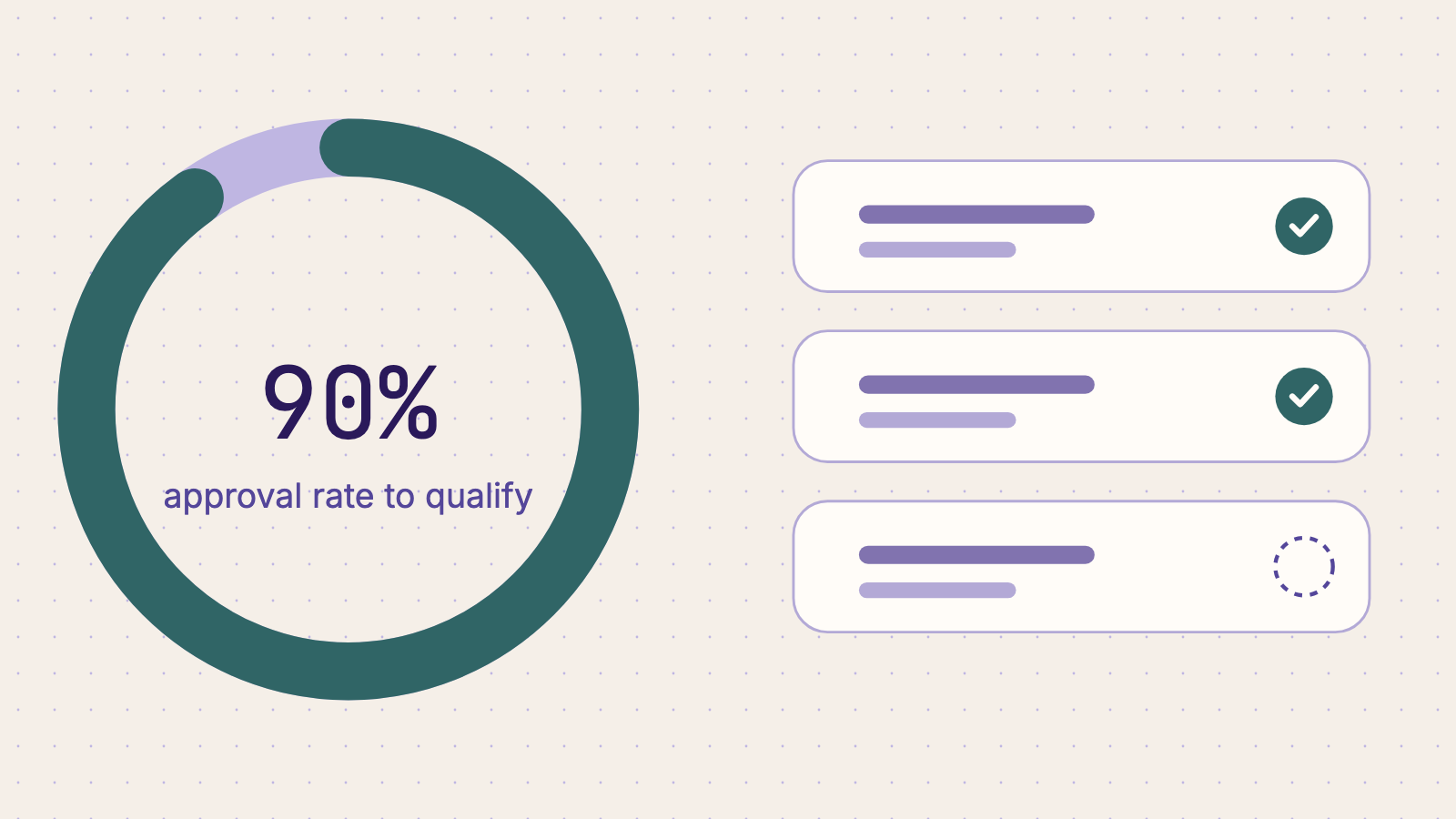
Under Texas Insurance Code §4201.653, an HMO or insurer may not require preauthorization for a particular service if, in the most recent one-year evaluation period, it "has approved or would have approved not less than 90 percent" of your requests for that service. You must also have provided the service at least five times during the evaluation period. TDI's FAQ, citing its rule and the statute, frames the test as five or more eligible requests with at least 90 percent approved.
You don't apply. The statute says a physician or provider "is not required to request an exemption" to qualify, and TDI says exemptions are issued by plan issuers, not by TDI. The issuer must evaluate at least once a year, and it may continue an existing exemption without re-evaluating.
Notices you should receive
Within five days of qualifying, the issuer must send a notice stating that you qualify, listing "the health care services and health benefit plans to which the exemption applies," and giving the duration. If you submit a preauthorization request for a service you are already exempt from, the issuer must promptly send the same information plus its payment requirements. TDI's FAQ says denial notices are required too, except where you had fewer than five eligible requests for the service.
TDI adds two details that matter for billing. Exemptions are granted under the NPI used to make preauthorization requests, and they extend to care ordered or referred by the exempt provider. The claim then needs the exempt provider's name and NPI.
Rescission and independent review
A Texas exemption can be rescinded only in January of a year beginning on or after the first anniversary of the last day of the most recent evaluation period. The issuer must base the decision on a retrospective review of a random sample of 5 to 20 claims and find that less than 90 percent met its medical necessity criteria. The reviewer must be a Texas-licensed physician in the same or similar specialty for a physician, and cannot hold an administrative medicine license. If fewer than five claims exist for the service, the issuer reviews all of them.
The issuer must notify you at least 25 days before the rescission takes effect, with the sample information and a plain-language explanation of appeal rights. You can go straight to an independent review organization without an internal appeal, and the issuer pays for it. The IRO must finish an expedited review within 30 days, and you can ask it to consider a second random sample of 5 to 20 claims.
Two protections are easy to overlook. Under §4201.657, an issuer "may not retroactively deny a health care service on the basis of a rescission," even if the IRO affirms it. Under §4201.659, the issuer may not deny or reduce payment for an exempt service on medical necessity grounds unless the provider knowingly misrepresented the service or failed to substantially perform it.
What HB 3812 changed in 2025
HB 3812 passed in the 89th Legislature's regular session and took effect September 1, 2025. TDI's Bulletin B-0012-25 summarizes it as gold card reform that "expands claims evaluated," "extends evaluation periods," and "creates an appeal process for initial denials of gold cards." The enrolled bill text shows each edit.
| Rule | Before HB 3812 | After HB 3812 (effective 9/1/2025) |
|---|---|---|
| Evaluation period | Six months | One year |
| Requests counted | Not specified | All requests to the issuer or its affiliate, across all plans it issues or administers |
| Minimum volume | Not specified in statute | Service provided at least five times in the evaluation period |
| Rescission window | January or June | January only, on or after the first anniversary of the evaluation period's end |
| IRO review | Adverse exemption determinations | Expressly includes a decision to deny an exemption |
| Rescission reviewer | Texas-licensed physician, same or similar specialty | Same, and may not hold an administrative medicine license |
| Annual reporting to TDI | Not specified | Required under new §4201.660 |
The affiliate rule matters most in practice. Requests you send to an issuer's Medicare Advantage or self-funded business can now count toward the approval rate, even though the exemption itself still applies only to state-regulated plans. TDI's FAQ illustrates this with an issuer called ABC-TX, where the exempt physician "would need to continue requesting preauthorization for patients covered under Medicaid and Medicare Advantage plans offered by ABC-TX."
The bill also protects exemptions that existed before September 1, 2025, which may not be rescinded before the first anniversary of the last day of their most recent evaluation period. TDI's example: an exemption based on a period that ended June 30, 2025, could first be rescinded in January 2027. TDI said in September 2025 that it would update its 2022 rules and expected issuers to follow the statute from September 1, 2025. Its 2026 rules page shows proposed amendments to 28 TAC §§19.1730 to 19.1733 and §12.601, plus a new §19.1734, filed May 1, 2026 and published May 15, 2026, with no adoption date listed as of November 6, 2026.
Other states with gold card laws
Other states have enacted laws in this area, but they don't all work the same way. The table covers only states whose statute, legislature or insurance department page we checked directly, so it is not a complete national list.
| State | Source checked | Threshold | Key features |
|---|---|---|---|
| Texas | Insurance Code §4201.653 | 90% approved, service provided at least 5 times, one-year period | IRO review, January-only rescission, no retroactive denial |
| West Virginia | W. Va. Code §33-24-7s(k) | Average of 30 procedures per year and a 90% final prior approval rating in a six-month period | Exemption for at least the next six months; may be rescinded based on the insurer's internal audit; insurer may still require prior authorization for experimental treatment, non-covered benefits, pharmaceutical medication or out-of-network services |
| Arkansas | Ark. Code §23-99-1103(23), §§23-99-1120 to 1126 and §23-99-1128, as amended by Act 511 of 2025 | 90% approved or would have approved | Defined "gold card program"; IRO appeal of rescissions; insurers or PBMs may ask state boards to exempt a prescription drug from the program |
| Wyoming | W.S. §26-55-112 and the Wyoming Department of Insurance | At least 5 requests in 12 months and 90% approval | Twelve-month exemption per service and per insurer; pharmacy and prescription drugs excluded; department-stated start date January 1, 2026 |
| Louisiana | R.S. 22:1020.61 (Act 432 of 2022) | Not specified | Issuers must run a program for "selective application" of prior authorization; participation criteria and covered services are at the issuer's "sole discretion" |
| Michigan | MCL 500.2212e(16) (Public Act 60 of 2022) | Not specified | Insurers must adopt a program that "promotes the modification of prior authorization requirements" based on provider performance, risk-sharing or other factors |
Louisiana and Michigan require payers to have a program but set no statutory threshold, so you'll need each payer's own program terms. Louisiana requires issuers to file a description, criteria and service list with the Department of Insurance. Arkansas's Bulletin 4-2026, dated February 24, 2026, says a provider must appeal a rescission "within twelve (12) months of receiving proper notice."
Vermont took a different route that teams sometimes lump in with gold carding. Since Act 111 of 2024 took effect on January 1, 2025, 18 V.S.A. §9418b bars health plans from imposing prior authorization on services ordered by a contracted primary care provider, with exceptions for prescription drugs and out-of-network services. That rule applies by provider type, not by approval history.
How federal rules fit
The CMS Interoperability and Prior Authorization final rule (CMS-0057-F) does not create gold carding. CMS asked for comments on gold carding and prior authorization exemption programs, then wrote in the final rule that "since no policies were proposed, we are not finalizing policies in this area at this time." Its denial-reason, decision-timeframe and API requirements are separate obligations for the payers it covers.
In the states where CMS runs its WISeR model, traditional Medicare has its own, separate track. CMS's WISeR model FAQ says "WISeR is planning to launch a 'gold carding' or exemption program in 2026," under which providers who meet an affirmation threshold "will generally be exempt" from additional prior authorization and pre-payment review for the selected WISeR services. The FAQ does not state a numeric threshold. The WISeR and state AI laws overview covers the model itself.
What PA teams should track
A gold card shifts work from submitting requests to proving the exemption applies. These are the records worth keeping for every exemption:
- The notice itself. Save the services, plans and duration exactly as listed, and the NPI the exemption was granted under.
- The plan type on each encounter. TDI says self-funded employer plans are "generally regulated by the federal Department of Labor" rather than TDI, even when an insurer administers them, and their ID cards won't show "TDI" or "DOI."
- The service definition. TDI says eligible services follow each issuer's published list of services that require preauthorization, and that list varies by issuer.
- The ordering provider on the claim. When another provider renders or bills exempt care, the claim needs the exempt provider's name and NPI.
- Rescission dates. Log the notice date, the effective date and your IRO filing date, since in Texas a timely IRO request keeps the exemption in place until the review ends.
The practical rule is simple. For any patient, confirm whether authorization is required for this plan, this service and this setting before you treat an exemption as covering it. Where the answer is unclear, confirm it with the payer and record the reference number, and a clear status check process helps when a request was submitted anyway.
Where automation fits
Gold carding makes the requirement check more important, not less. SuperDial's prior authorization workflow confirms with the payer "whether the service, code and setting need an authorization" and tracks each submitted authorization through to a decision. Your team still submits the requests, and results come back as structured data with status, authorization number, approved units and valid dates.
FAQ
Do I have to apply for a gold card in Texas?
No. Exemptions come from issuer evaluations, not applications. TDI suggests that if you routinely request preauthorization and haven't received a notice, you check the issuer's website, contact the issuer and then contact TDI if needed.
Can a payer deny a claim after rescinding a gold card?
In Texas, not on the basis of the rescission itself. The statute bars retroactive denial based on a rescission, and it limits payment denials for exempt services to knowing misrepresentation or failure to substantially perform the service. Other states have different rules, so check your state's statute.
Does a gold card cover Medicare Advantage patients?
Not under Texas law. TDI lists Medicare Advantage and Part D among the coverage types the law does not apply to, even when the same issuer sells them. Texas law doesn't require one, so check the Medicare Advantage plan's own requirements.
Does a gold card apply to prescription drugs?
It depends on the state. TDI says Texas exemptions are granted for each service "including a prescription drug," while Wyoming's Department of Insurance says pharmacy and prescription drugs are excluded from gold carding. West Virginia's statute lets insurers keep requiring prior authorization for pharmaceutical medication.
Sources
- Texas Legislative Council, Texas Insurance Code Chapter 4201, Subchapter N: https://tcss.legis.texas.gov/resources/IN/htm/IN.4201.htm
- Texas Legislature Online, History for 89(R) HB 3812: https://capitol.texas.gov/BillLookup/History.aspx?LegSess=89R&Bill=HB3812
- Texas Legislature Online, 89(R) HB 3812 Enrolled Version: https://capitol.texas.gov/tlodocs/89R/billtext/html/HB03812F.htm
- Texas Department of Insurance, Preauthorization Exemptions (last updated 9/2/2025): https://www.tdi.texas.gov/health/hb3459.html
- Texas Department of Insurance, FAQ on preauthorization exemptions (last updated 9/2/2025): https://www.tdi.texas.gov/health/hb3459-faq.html
- Texas Department of Insurance, Commissioner's Bulletin B-0012-25 (August 5, 2025): https://www.tdi.texas.gov/bulletins/2025/b-0012-25.html
- Texas Department of Insurance, Proposed and Adopted Rules for 2026: https://tdi.texas.gov/rules/2026/index.html
- West Virginia Legislature, W. Va. Code §33-24-7s Prior authorization: https://code.wvlegislature.gov/33-24-7S/
- Arkansas General Assembly, Act 511 of 2025 (HB 1301): https://arkleg.state.ar.us/Home/FTPDocument?path=%2FACTS%2F2025R%2FPublic%2FACT511.pdf
- Arkansas Insurance Department, Bulletin No. 4-2026, "Gold card" appeals under Act 511 of 2025 (February 24, 2026): https://portal.insurance.arkansas.gov/LegalPubsPublic/Documents/Bulletins/Bulletin_4-2026.pdf
- Wyoming Legislature, Wyoming Statutes Title 26 (W.S. §26-55-112): https://wyoleg.gov/statutes/compress/title26.pdf
- Wyoming Department of Insurance, Prior Authorization: https://doi.wyo.gov/companies/prior-auth
- Louisiana State Legislature, R.S. 22:1020.61 Selective application of prior authorization: https://www.legis.la.gov/legis/LawPrint.aspx?d=1296611
- Michigan Legislature, MCL 500.2212e: https://legislature.mi.gov/Laws/MCL?objectName=mcl-500-2212e
- Michigan Legislature, Public Act 60 of 2022 (Enrolled Senate Bill 247): https://legislature.mi.gov/documents/2021-2022/publicact/htm/2022-PA-0060.htm
- Vermont General Assembly, 18 V.S.A. §9418b: https://legislature.vermont.gov/statutes/section/18/221/09418b
- Vermont General Assembly, Act 111 of 2024 As Enacted: https://legislature.vermont.gov/Documents/2024/Docs/ACTS/ACT111/ACT111%20As%20Enacted.pdf
- Federal Register, CMS Interoperability and Prior Authorization Final Rule, 89 FR 8758 (February 8, 2024): https://www.federalregister.gov/documents/2024/02/08/2024-00895/medicare-and-medicaid-programs-patient-protection-and-affordable-care-act-advancing-interoperability
- CMS, WISeR Model Frequently Asked Questions (page last modified 09/22/2026): https://www.cms.gov/priorities/innovation/files/document/wiser-model-frequently-asked-questions
- SuperDial, Prior Authorization workflow: https://www.superdial.com/workflows/prior-authorization
Run a pilot on a real workflow.
Bring a representative batch, define the output schema, and validate ROI with your payer mix in 30 to 90 days.
