
SuperDial vs. LunaBill: Which Fits Your Unpaid Claims Backlog?
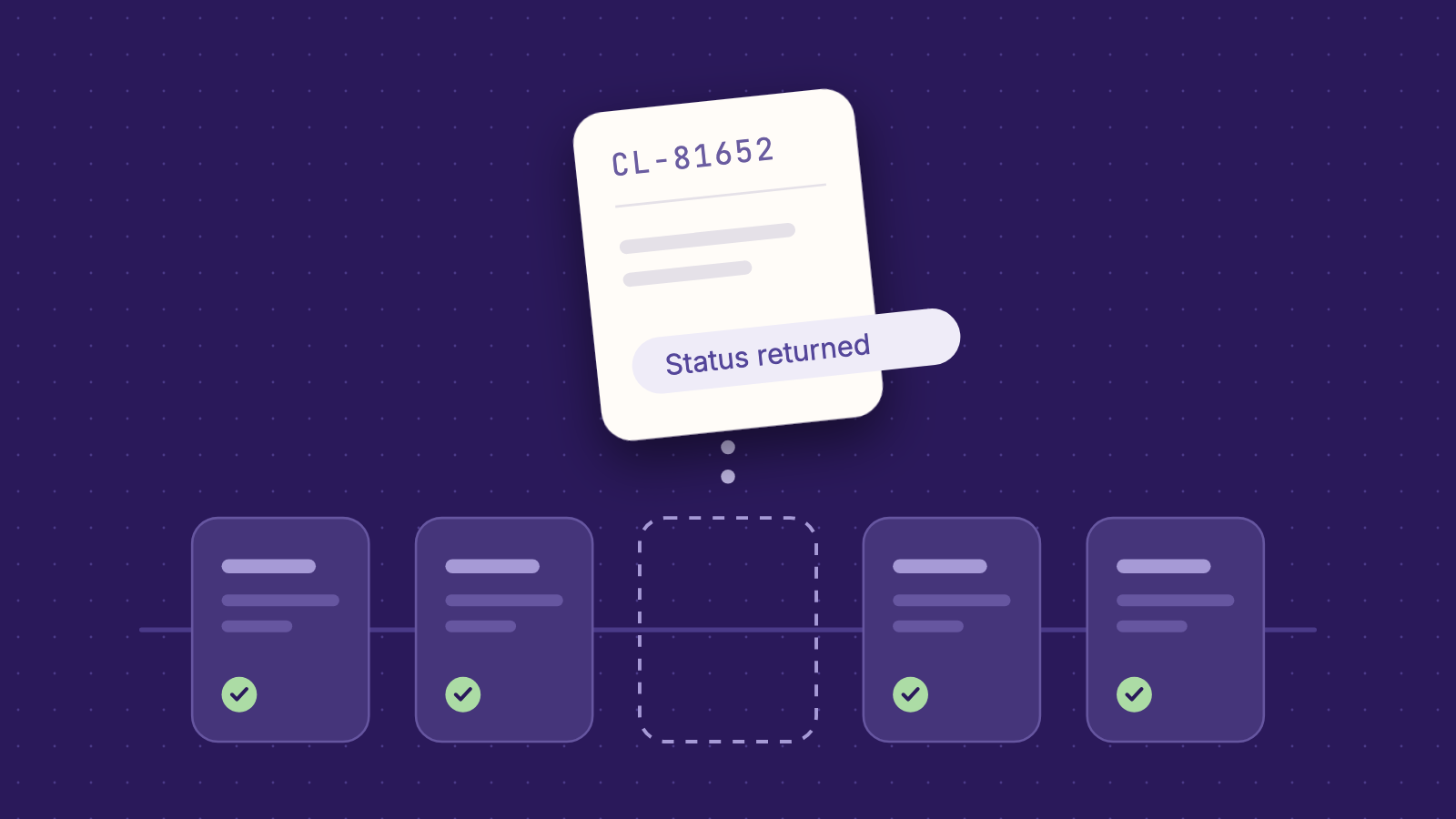
Most unpaid claims do not need a new strategy. They need one fact from the payer: why the claim pended, when it was received, or which check number the payment went out on. Collecting it is what fills your billers' days.
SuperDial and LunaBill both send AI agents after those answers. SuperDial works across multiple channels, including electronic sources, payer portals and phone calls, to get answers on claims, benefits, prior authorizations and credentialing, and every answer comes back in a structured format your team defines. LunaBill offers AI agents that work the AR worklist for hospitals and RCM firms inside the EHR, checking payer portals and calling payers on claims that have stalled.
That makes the useful comparison narrower than a feature list. When an agent finishes with a claim, does your team know exactly what to do next, and does that answer land where your billers already work?
TL;DR
- SuperDial covers the payer side of the revenue cycle. Claim status and AR follow-up, denial follow-up, benefits verification, prior authorization checks and credentialing status all run on one platform, across electronic sources, payer portals and phone calls.
- Each answer is built to be worked. SuperDial returns fields in your output schema, a summary and a next action, so a biller can route the claim to reconciliation, correction or follow-up without rereading call notes.
- RCM companies report results at volume. MBW RCM cut costs in half while placing more than 1,000 calls a month, and Mentaya reports more than 100 hours saved each month on its claim follow-up and verification calls.
- LunaBill centers on the hospital AR queue. Its agents pull claim status from payer portals, call payers when a claim is stuck and write a structured note with the next action back into the workflow.
- Settle it with your own claims. Give both platforms the same stalled batch and count how many results your team could act on without another call.
Where SuperDial and LunaBill each start
SuperDial is built for RCM companies, provider groups, health systems, digital health organizations, dental groups and DSOs, payers and pharma teams. Its focus is the payer-facing work that ties up AR capacity: finding out where a claim stands, what a plan covers, whether an authorization is in place and whether a provider is enrolled.
LunaBill sells to hospital and health system revenue cycle teams and to RCM and BPO firms. Its agents work the AR queue inside the EHR and clearinghouse a team already runs, with aged commercial claims as a stated priority.
The overlap is genuine: both put AI agents on claim follow-up for health systems and RCM firms. The center of gravity differs. SuperDial turns each payer answer into a structured result with a next action, in one consistent form across payer workflows. LunaBill positions its agents as an AR layer that works hospital claims inside existing systems. For another head-to-head on payer calls, see SuperDial vs. Infinitus.
SuperDial and LunaBill, row by row
| What to evaluate | SuperDial | LunaBill |
|---|---|---|
| Who it serves | RCM companies, provider groups, health systems, digital health, dental groups and DSOs, payers, pharma | Hospital and health system revenue cycle teams; RCM and BPO firms |
| Payer workflows | Claim status and AR follow-up; denial follow-up; benefits verification; prior authorization requirement checks and status; credentialing and enrollment status; worked across electronic sources, payer portals and phone calls | AR worklist claims; portal claim status checks; payer calls on stalled claims; denial follow-up; eligibility and remittance pulled during portal checks |
| What comes back | Fields in your output schema; status, payment details, denial reason and code, appeal path and next action; summary, timestamps and confidence markers; recording and transcript when a call is made | Claim status, denial codes, payment details and reference numbers; a structured note with the next action |
| Delivery into systems | API and webhooks, CSV, SuperDial dashboard; structured notes and statuses mapped into EHR or PMS fields where an integration is in place | Call notes and reference numbers written back to the EHR, with write-back scoped during onboarding |
| When automation hits a limit | AI agents handle the calls and escalate to a real person when needed; unfinished requests return to your team with context and the next step | The customer's team keeps escalations and judgment calls; every agent action carries an audit trail |
From payer answer to the next move on the claim
The 2024 CAQH Index timed a claim status check by phone at 25 minutes for medical providers and staff, the longest of the tasks it measured. If the note from that call is vague, someone spends those minutes again.
SuperDial's claim status workflow returns the details that decide the next move as fields. A result can carry the received date, claim and processing status, paid and allowed amounts, the payment date and check or EFT number, the denial reason and code, the appeal path and the next action, whenever the payer supplies them. Your billers can then sort the queue by what each claim needs: - Paid, or paid below the contract: payment details are attached, so the claim moves into reconciliation or underpayment review. - Denied: the reason, code and appeal path sit on the claim, so the team can decide on correction, resubmission or appeal in one pass. - Pending or not on file: a received date, or the lack of one, shows whether the payer has the claim and what it still needs.
The same structure applies beyond claims. On a benefits verification request, your team gets network status, remaining deductible and out-of-pocket amounts, carve-outs and whether the service needs an authorization. On an authorization, your team sees the auth number, approved units, the dates it is valid and what the payer still wants. For credentialing, each provider and payer pair comes back with its status, dates, missing items and next action.
A stuck claim often traces back to a benefit, authorization or enrollment question. One structured format across all four keeps the fix in the same queue.
How work reaches SuperDial and how answers come back
Your team sends claims by uploading a CSV, connecting through the API or sharing a work queue export. SuperDial then works each request across multiple channels, including electronic sources, payer portals and phone calls. Your team receives the same structured result no matter which one produced the answer. On the phone, the voice agent gets through the IVR and the hold, verifies itself with the NPI, Tax ID, member ID or claim ID, then asks the representative for the fields your team needs.
Requests run in parallel, so an hour on hold with a single payer does not stall the other claims in your backlog. Teams can configure scripts, escalation rules, retry logic and client-specific policies.
Finished results are available by API, webhook, CSV file or the SuperDial dashboard. Depending on how your workflow is set up, structured notes and statuses can also map into existing EHR or PMS fields, and teams without an integration can start with a CSV batch.
What two RCM companies report
MBW RCM supports over 40 customers with a team of more than 700 medical billers, coders and AR professionals. It now places over 1,000 calls a month through SuperDial for claim follow-up and insurance verification, and it reports cutting costs by half without adding staff. As MBW puts it, SuperDial's AI agents "handle those calls and escalate to a real person when needed," leaving its team more time for complex denials and accelerating AR.
Mentaya is an RCM company serving behavioral health, with a focus on out-of-network benefits verification. It places 1,000 calls a month through SuperDial for claim follow-up and insurance verification, submitted in bulk through CSV upload, and reports more than 100 hours saved each month. Both sets of figures are customer-reported, and your results will depend on your payer mix.
How LunaBill handles payer calls
LunaBill runs AI agents that work the AR queue for hospitals and RCM firms. On a typical claim, the agents check the payer portal first. If the claim is stalled, they call the payer, navigate the IVR, wait on hold and get answers from a live representative, capturing a reference number.
On a claim status call, the agent takes the next claim off the worklist, asks the questions an experienced biller would and writes a structured note with the next action back into the workflow. During portal retrieval it can also pull eligibility and remittance information alongside claim status.
LunaBill works inside the EHR and clearinghouse a team already uses, and write-back of items such as call notes is scoped and configured during onboarding. Escalations and judgment calls stay with the customer's staff, and every agent action is recorded in an audit trail the customer's team can review.
Setting up a side-by-side pilot
Pick the part of your AR that eats the most staff hours, for example aged commercial claims, no-response claims or denials that arrived without a reason. Sign a BAA with each platform first, then hand both the identical batch, hard payers included.
Then score each claim the same way. Did the result include every field your team needs to reconcile, correct or appeal the claim? Did it name a next action? Did it reach your EHR, PMS or work queue with no retyping, and could a biller take over each exception from where the agent left off? Count workable outcomes, not dials.
Frequently asked questions
What is the main difference between SuperDial and LunaBill?
SuperDial works across electronic sources, payer portals and phone calls and returns structured answers in your own schema for claim status, denials, benefits verification, prior authorization and credentialing, delivered by API, webhooks, CSV, the dashboard or write-back where integrated. LunaBill centers on working the hospital AR worklist inside the EHR.
We already get 277 responses. Where does SuperDial add to them?
SuperDial complements 276/277 claim status and 270/271 eligibility transactions rather than replacing them. When a 277 comes back without what your team needs, such as a clear reason for a pending status or a claim the payer cannot find, SuperDial gets that detail and returns it in the same structured format.
Can an RCM company run SuperDial across many clients?
Yes. Requests run in parallel, and workflows can carry client-specific rules, scripts, retry logic and escalation policies. Your operators then work one consistent result format across payers and accounts.
What security commitments come with SuperDial?
On security, SuperDial states that it is HIPAA compliant, SOC 2 Type II attested and HITRUST e1 certified. A BAA comes before PHI changes hands, data is protected with TLS in transit and AES-256 at rest, and SSO, MFA and role-based permissions limit who can see it. LunaBill states that it is HIPAA compliant and SOC 2 Type II and signs a BAA before any PHI moves.
Interested in evaluating SuperDial on your unpaid claims?
Choose one stalled AR queue, settle which fields your billers want on every claim, and judge SuperDial on what comes back. Book a demo to scope the pilot on those real claims.
Run a pilot on a real workflow.
Bring a representative batch, define the output schema, and validate ROI with your payer mix in 30 to 90 days.
